
What Therapy Has Done for Me: A Journey I Never Expected to Compare to a Trach! Therapy is very similar to a trach journey…at least for me.
That probably sounds like a strange comparison. But the more I think about it, the more I realize just how much these two journeys have in common.
Both started with recognizing that something had to change. Both came with fear, uncertainty, and a million “what ifs.” Both required learning an entirely new way of life. And both eventually led to something I never thought was possible: a better quality of life.
The biggest difference?
I was able to make the decision for Journi much easier and much sooner than I was able to make the decision for myself.

The first step: Determining the need
When Journi was in the NICU, her doctors determined that she needed a trach because of her severe tracheomalacia. The goal wasn’t just to keep her alive. It was to give her the ability to come home, grow, thrive, and have a better quality of life.
For me, it took much longer to recognize that I needed something different.
I had gotten to the point where I was living in survival mode. I was functioning. I was getting through each day. I was doing what needed to be done.
But I wasn’t really living anymore.
I knew something had to change. I knew I wanted a better quality of life, but recognizing that I needed help and actually being willing to accept it were two very different things.
The second step: Making the decision despite all the “what ifs”
Making the decision was probably one of the hardest parts of both journeys.
With therapy, I had so many questions.
What if therapy doesn’t work for me?
What if my therapist judges me?
What if talking about my past is too hard? What if I don’t know how to explain how I feel? What if I open up and regret it?
With Journi, the questions were different, but the fear was just as real.
What if the trach causes more pain than it helps? What if I can’t take care of her by myself?
What if I never hear my child’s voice?
What if we’re making the wrong decision?
The difference is that when it came to Journi, I was able to put my fear aside and make the decision because I knew she needed it.
When it came to myself, I wasn’t nearly as brave. It took years for me to take that same step for my own life.
It took becoming pregnant with twins for me to finally take the steps into therapy.
Looking back, I wish I had done it sooner.
I wish I had started therapy when Journi was in the NICU.
The third step: Taking action and learning a new way of life
The first therapy appointment was scary.
I was meeting someone I didn’t know and trusting that she might be able to help me. I didn’t know if we’d be a good fit. I didn’t know what it would feel like to talk about things I’d spent years avoiding.
But God knew what I needed.
Slowly, I learned to trust someone enough to truly open up. I learned to talk about my past— not just what happened, but how those things made me feel.
I learned that it was okay to cry.
I learned that it was okay to not be okay.
And most importantly, I learned that I didn’t have to push my emotions away just to keep functioning.
That reminded me so much of Journi’s trach journey.
There was a time when I didn’t know how to change a trach. I didn’t know the safest way to leave the house with a medically fragile child. I didn’t know everything I needed to pack.
So I made checklists.
I learned.
I practiced.
I asked questions.
I figured it out.
I learned how to answer strangers who asked questions I never thought people would ask. And I learned to give grace when people didn’t understand, using those moments as opportunities to teach them about Journi and her needs.
Eventually, the things that once terrified me became routine.

Therapy has been much the same.
I’m learning new tools. I’m learning how to process emotions. I’m learning what is mine to carry and what isn’t. I’m learning that I don’t have to control everything.
And I’m learning that feeling my emotions doesn’t mean I’m falling apart.
The fourth step: Thriving instead of surviving This is where I see the biggest connection between the two journeys.
Today, I’m no longer living in survival mode.
I’m living.
Therapy has taught me how to talk through, process, and actually feel my emotions. I didn’t realize how much I had stopped allowing myself to feel when I was in survival mode.
I’ve learned not to stress over things I can’t control.
That has been huge for me.
I didn’t realize how much anxiety I was creating for myself by trying to control things that were never mine to control in the first place.
I’ve learned to look at what my past has taught me and use those lessons to move forward instead of allowing the past to dictate my present.
I’m learning to enjoy life again.
I’m learning to take it one day at a time.
And I’m learning to use the tools therapy has given me when life gets hard instead of automatically going back into survival mode. When I look at Journi’s journey, I see that same transformation.
I watched my child go from being medically fragile in the NICU to thriving at home with her siblings. I watched her reach milestones. I watched her slowly come off the ventilator. And eventually, she was decannulated.
Things I once thought would never become normal became not only normal, but easy.
Trach changes became routine.
Leaving the house became routine.
I eventually knew exactly what to pack without even needing a checklist.
The things that once terrified me became things I confidently knew how to do.
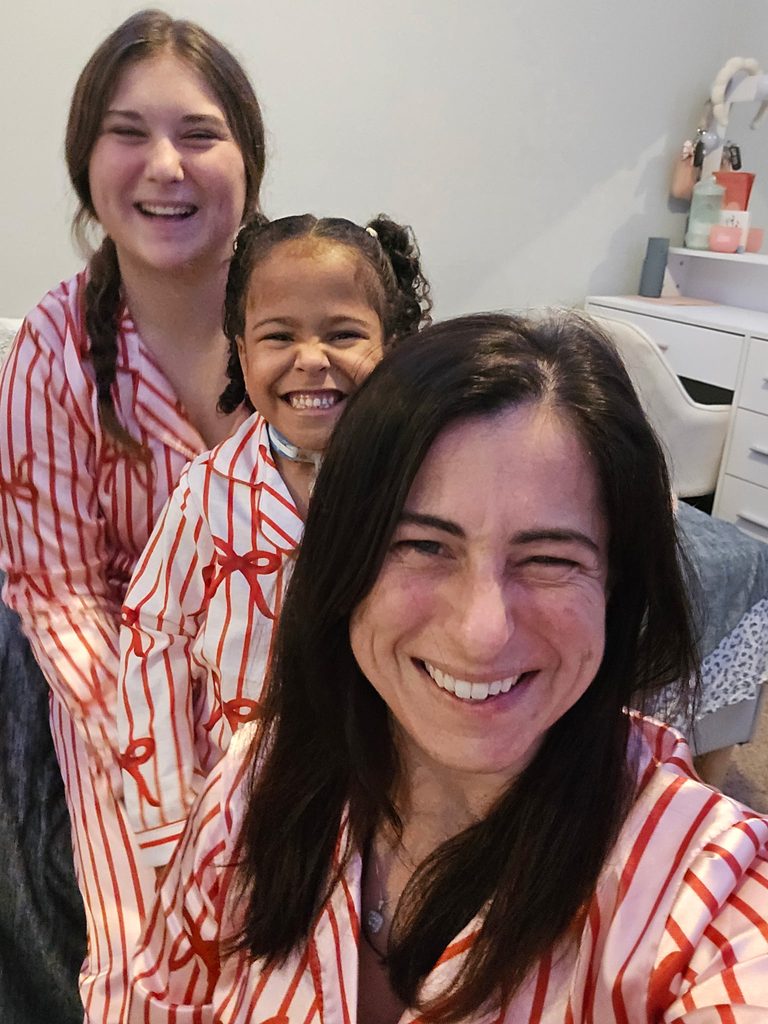
And now Journi is one of the happiest little girls I know.
She loves life.
She is thriving.
And I know that without her trach, she wouldn’t have had the opportunity to experience life the way she has.
The part I wish I could change
Now that I’m in therapy, I often think about the version of myself who was sitting beside Journi’s NICU bed.
I wish I could go back to her.
I wish I could tell her that she didn’t have to be so strong all the time.
That she was allowed to be scared.
That she was allowed to cry.
That she was allowed to ask for help. That she didn’t have to carry everything by herself.
Because I now realize that I didn’t truly live Journi’s trach journey.
I survived it.
And there is a difference.
When you’re in survival mode, your brain is focused on getting through the next moment, the next appointment, the next crisis, the next day.
I’ve learned that I don’t remember a lot of that time.
Thankfully, I’m a picture person.
I have countless pictures and videos that remind me of moments that otherwise might be blurry or completely forgotten.
Those pictures are incredibly precious to me because they help me remember a chapter of our lives that my brain didn’t always have the capacity to fully hold onto.
And I can’t help but wonder how different those memories might feel if I had had the tools then that I have now.
Maybe I would have been able to slow down. Maybe I would have allowed myself to feel. Maybe I would have enjoyed more of the journey instead of simply trying to survive it.
What therapy has really done for me
Therapy didn’t erase my past.
It didn’t make everything easy.
It didn’t change the things that happened to me. What it changed was how I carry those things. It gave me tools.
It gave me permission to feel.
It taught me that I don’t have to live in survival mode forever.
And perhaps most importantly, it taught me something I wish I had understood years ago: I deserve a quality of life, too.
I was able to recognize that Journi deserved more than simply surviving.
I fought to give her a life where she could come home, grow, laugh, play, reach milestones, be with her siblings, and simply enjoy being a child. But somewhere along the way, I forgot that I deserved those things too.
I wish I had chosen therapy sooner.
I wish I had started when Journi was in the NICU. But I also know that I started when I was ready. And maybe that’s part of the journey, too.
Both the trach and therapy were scary decisions. Both came with challenges.
Both required me to learn things I never imagined I’d have to learn.
Both required trust, vulnerability, patience, and courage.
And both became two of the best decisions I’ve ever made—not only for my life, but for my child’s and my family’s lives.
Journi’s trach gave her the chance to thrive instead of simply survive.
Therapy is giving me that same chance.
And this time, I’m not just surviving the journey. I’m learning how to live it!

Written by Kristina Wilson